Always the bridesmaid
Raymond Poulidor rode the Tour de France fourteen times between 1962 and 1976. He finished on the podium in Paris eight times — runner-up on three of them — and in all those years and all those thousands of kilometres he never once pulled on the yellow jersey, not for a single day. His great rival Jacques Anquetil won the race five times and was admired; Poulidor never won it at all and was adored. France still calls him l'éternel second, the eternal runner-up, and it was meant, and taken, as a compliment.
You might wonder what a French cyclist who retired fifty years ago has to do with Swiss watches. The answer is that the Grand Prix d'Horlogerie de Genève has its own eternal seconds — houses that have won a great deal, and yet never the one prize that counts for most.
The golden hand
That prize is the Aiguille d'Or, the "Golden Hand", awarded once a year to a single watch as the competition's best-in-show. Everything else — the category prizes, the special awards — sits below it. A brand can fill a cabinet with GPHG silverware and still, if the Aiguille d'Or never lands, be said never to have quite won.
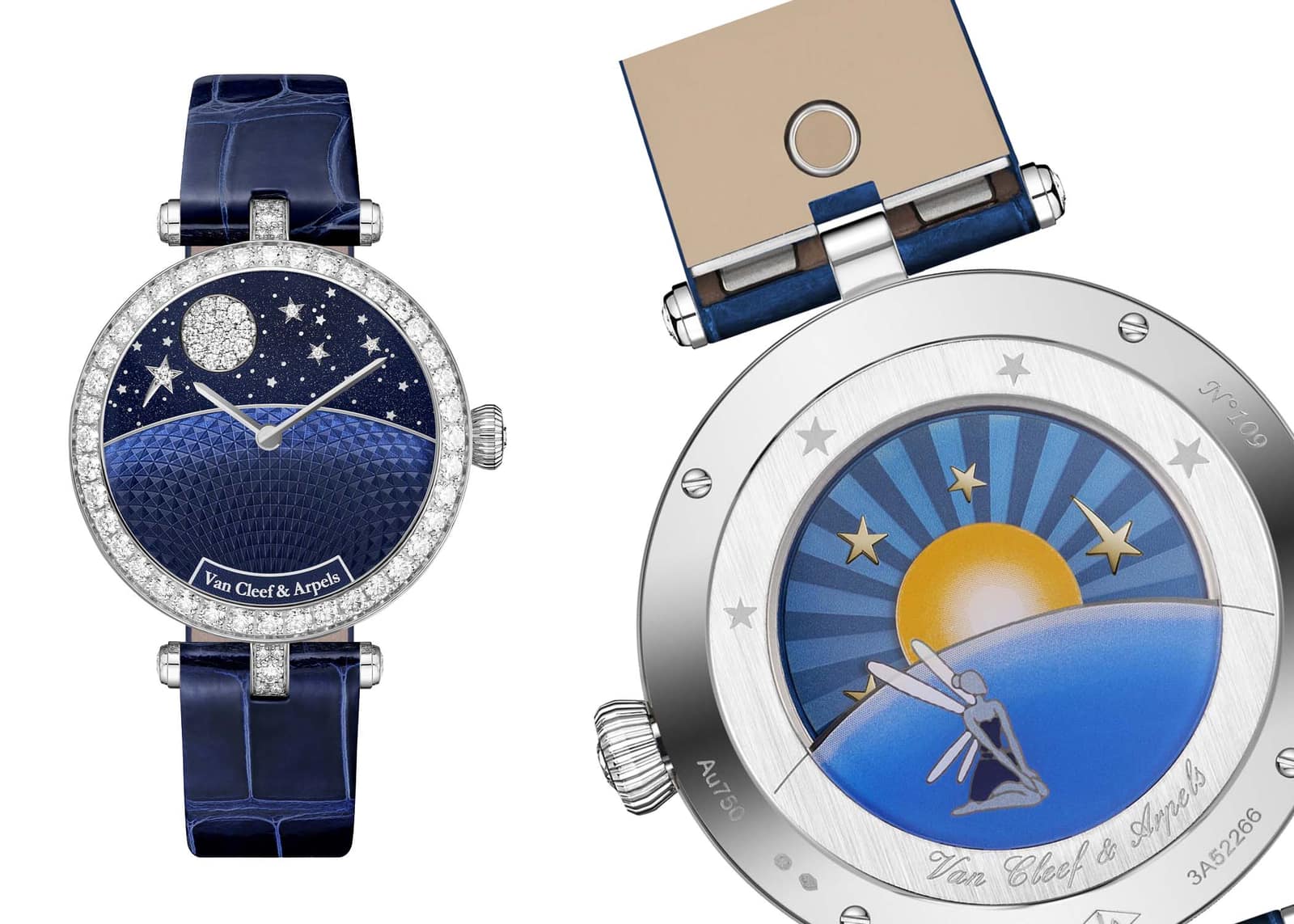
And some cabinets are very full indeed. Van Cleef & Arpels has entered seventy-six watches since 2001 and won fifteen prizes — more than all but a handful of houses anywhere — without a single Aiguille d'Or among them. Fifteen. The most-decorated maison in the whole of the GPHG's records, and it has never once taken the top step.
If Van Cleef is the case for volume, Voutilainen is the case for efficiency. Kari Voutilainen's tiny independent workshop has entered just twenty-four watches and turned twelve of them into prizes — a strike rate that would embarrass most marketing departments in Geneva — and still, no golden hand. Twelve prizes, never the top one. (The one-shot brands take a prize on their only visit; Voutilainen has taken a dozen and is still waiting for the one that matters. The GPHG plainly hands out its silverware and its gold by different rules.)
The nearly-men of volume
Others have gone at it through sheer weight of numbers. Zenith and Hublot have each put a hundred and three watches forward — as many as anyone in the field — for nine and five prizes respectively, and no Aiguille d'Or for either. Louis Vuitton, seventy-nine entries deep, has two prizes to show and, likewise, none of the big one. Turning up, it seems, is necessary but nowhere near sufficient.
Worse than a bridesmaid
And then there is Chaumet, which is a sorrow all of its own. Forty-seven watches entered. Eighteen of them shortlisted — eighteen times judged among the best six in a category. Prizes won: none. Not an Aiguille d'Or, not a category prize, not so much as a special mention. Nothing. To be a bridesmaid fifteen times over, as Van Cleef has been, is at least to keep being asked; Chaumet has been to eighteen weddings and caught not one bouquet.
Who gets the golden hand, and why
So who does take it? Overwhelmingly, the serious watchmaking houses. Audemars Piguet and Vacheron Constantin hold two Aiguilles d'Or apiece; Piaget, Bulgari, Chopard and TAG Heuer one each. Run an eye down the bridesmaids and a pattern surfaces: many are jewellers, or fashion houses, or independents whose glories fall in the decorative and ladies' categories — exactly the watches a jury reaching for one "best in show" has, historically, tended not to reach for. Some of this is not about quality at all. It is about which door you came in through.
Worth keeping in mind when you read a brand's track record on this site. The model prizes a brand's pedigree above almost everything else, and by that yardstick Van Cleef and Voutilainen are aristocracy. The Aiguille d'Or is a narrower filter, and quietly biased toward a particular idea of what a watch is for. Fifteen prizes tells you the jury loves a house. It does not tell you the jury will crown it.
Which is rather the Poulidor point. He never wore yellow, and it took nothing from him — if anything, the reverse. Van Cleef & Arpels has fifteen reasons to feel the same way, and will almost certainly find a sixteenth long before it ever troubles the golden hand. Some competitors are defined by what they win. The best-loved are sometimes defined by what they don't.