The GPHG strike rate nobody talks about
In cricket they call it a strike rate. In football, minutes per goal. Every sport has a way of separating the players who turn up from the players who convert. Watchmaking doesn't have one, so I built it.
The GPHG strike rate is simple: prizes won per watch entered at the Grand Prix d'Horlogerie de Genève. Across the 25 judged editions from 2001 to 2025, 5,526 watches have been entered and 338 prizes awarded. That puts the strike rate for the whole field at 6.1 per cent, roughly one prize for every sixteen watches.
Run it brand by brand and you get a table that looks nothing like the industry's usual pecking order.
The league table
Brands with at least ten judged entries, ranked by prizes per watch entered:
| Brand | Watches entered | Prizes | Strike rate | Aiguilles d'Or |
|---|---|---|---|---|
| MB&F | 13 | 8 | 62% | 1 |
| Voutilainen | 24 | 12 | 50% | 0 |
| F.P.Journe | 15 | 7 | 47% | 3 |
| Greubel Forsey | 18 | 8 | 44% | 2 |
| Habring² | 12 | 4 | 33% | 0 |
| Laurent Ferrier | 16 | 5 | 31% | 0 |
| Breguet | 24 | 7 | 29% | 2 |
| Tudor | 32 | 9 | 28% | 0 |
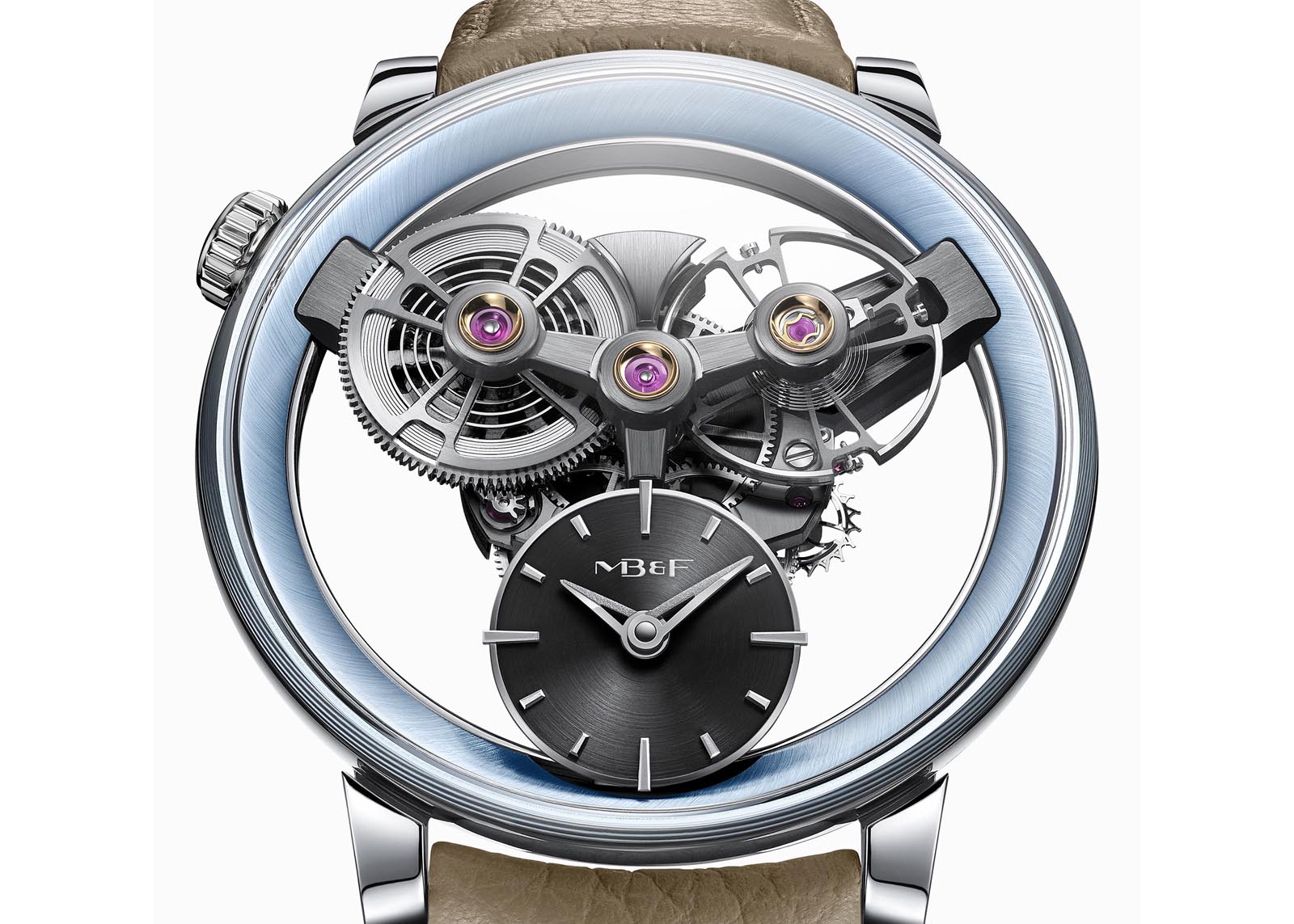
Voutilainen: 24 entries, 12 prizes. A fifty per cent strike rate, and twenty of those 24 watches made the shortlist. Kari Voutilainen's workshop has won as often as it has lost, and it still hasn't won the Aiguille d'Or. MB&F: 13 judged entries, 8 prizes, 62 per cent, including the 2022 Aiguille d'Or for the Legacy Machine Sequential Evo. Its fourteenth entry, the SP One Platinum, is on the 2026 Essential shortlist.
Six of the top eight are independents. Breguet is the only grande maison in the top eight. Tudor is the outlier, and I'll come back to it.
The perfect records
At the very top of the unfiltered table, above everyone, are brands most people outside the collecting world have never heard of. Their record is perfect: every judged watch has won.
| Brand | Record | Prizes |
|---|---|---|
| M.A.D. Editions | 2 from 2 | Challenge 2022 (M.A.D.1 Red), Petite Aiguille 2025 (M.A.D.2 Green) |
| Petermann Bédat | 2 from 2 | Horological Revelation 2020 (Dead beat second), Chronograph 2023 (Chronographe rattrapante) |
| Maison Alcée | 1 from 1 | Audacity 2023 (Persée Azur) |
| Rémy Cools | 1 from 1 | Horological Revelation 2024 (Tourbillon Atelier) |
| Fam Al Hut | 1 from 1 | Audacity 2025 (Möbius) |
The last three are the one-shots, which entered once, won and haven't been back. Two names are on 100 per cent with a second watch still to be judged. Vianney Halter won the Innovation prize with his only judged entry in 2013, and has been named Best Watchmaker as well. Berneron won with its first. Both are on the 2026 shortlist, so on 7 November each either keeps a perfect record or loses it.
The volume houses
Now the other end. These are the brands that have entered the most watches:
| Brand | Watches entered | Prizes | Strike rate |
|---|---|---|---|
| Chopard | 142 | 12 | 8.5% |
| TAG Heuer | 117 | 10 | 8.5% |
| Piaget | 110 | 15 | 13.6% |
| Hublot | 103 | 5 | 4.9% |
| Zenith | 103 | 9 | 8.7% |
| Bulgari | 97 | 11 | 11.3% |
| Audemars Piguet | 92 | 17 | 18.5% |
| Louis Vuitton | 74 | 2 | 2.7% |
| IWC Schaffhausen | 71 | 1 | 1.4% |
Audemars Piguet has won more GPHG prizes than any other brand, 17. It took 92 watches to do it. Voutilainen has won 12 from 24. IWC's one prize from 71 entries happens to be an Aiguille d'Or, which shows how lumpy these numbers are, but it is still one prize from 71.
Below them is a longer list with no prizes at all. Of the brands that have entered, 537 have never won anything. They include Corum with 54 entries, Carl F. Bucherer with 51 and Baume & Mercier with 50.
Why the small brands win
The obvious reading is that small independents enter selectively and the big houses enter broadly. That is true, and it doesn't make it any less interesting.
An independent making a few dozen watches a year might put one or two forward, the best thing it has made. A group brand with a full catalogue enters across categories, and the jury sees its ordinary watches as well as its exceptional ones. The comeback brands show the same effect from the other side. Brands that return after a break tend to come back with fewer, better-chosen entries, and their strike rate rises from one prize per 21 watches to one per 13.
Tudor complicates the story in a useful way. It is not small and it is not an independent, yet it converts 28 per cent of its entries. It has never put forward more than four watches in a year, and all nine of its prizes are Black Bays and Pelagos winning the categories that reward value: Challenge, Petite Aiguille, Sports, Diver's and Revival. Selectivity is a strategy, and a brand of any size can adopt it.
What the jury rewards, consistently and across a quarter of a century, is not scale.
The industry judging itself
It's worth pointing out who makes these calls. The GPHG jury is drawn largely from inside the trade: watchmakers, designers, retailers, collectors and a few of us who write about it. This is the industry judging itself. That makes the result rather more telling than anything said about it from the outside.
The industry's own experts, voting year after year, keep finding the best work in the smallest workshops. It is also the opposite of what the GPHG Index prediction model leans on. The model's strongest signal is brand pedigree, which rewards accumulated history. Strike rate rewards something else: the habit of only turning up with something worth judging.
Method
- Prizes are every GPHG prize credited to a brand, including the Aiguille d'Or and the special prizes, as recorded in the GPHG Index archive.
- Watches entered counts every watch the brand submitted in the 2001 to 2025 editions. 2026 entries are excluded because they haven't been judged yet. The Brands page does include them, which is why it shows MB&F at 57 per cent (8 from 14) until the ceremony.
- Minimum of ten entries for the main table, so that one lucky watch doesn't top it.
- Caveats. The 2001 and 2002 editions are only partly recorded and lean towards winners, which flatters early entrants such as F.P.Journe. A watch can win twice: MB&F's Legacy Machine N°1 took the Men's prize and the Public prize in 2012. A few early prizes went to watches whose entries aren't in the record. Counted as winning watches rather than prizes, MB&F's rate is 5 from 13, or 38 per cent. Person awards such as Best Watchmaker count towards a brand only where the person is the brand, as with Vianney Halter.
The full, sortable table for all 725 brands is on the GPHG Index Brands page. For more on treating the archive like this, see Reading watches as data.
Frequently asked questions
What is the GPHG strike rate?
It is the number of Grand Prix d'Horlogerie de Genève prizes a brand has won divided by the number of watches it has entered. Across all judged editions from 2001 to 2025, 5,526 watches were entered and 338 prizes awarded, a strike rate for the whole field of 6.1 per cent, or roughly one prize per sixteen watches.
Which watch brand has the best record at the GPHG?
Among brands with at least ten entries, MB&F has the highest strike rate, with 8 prizes from 13 judged watches (62 per cent), followed by Voutilainen with 12 from 24 (50 per cent), F.P.Journe with 7 from 15 and Greubel Forsey with 8 from 18. M.A.D. Editions and Petermann Bédat have perfect records of two prizes from two entries.
Which brand has won the most GPHG prizes?
Audemars Piguet, with 17 prizes, though it entered 92 watches to win them, a strike rate of 18.5 per cent. Van Cleef & Arpels and Piaget have 15 each.
Do big watch brands do worse at the GPHG?
On strike rate, generally yes. The brands that enter the most watches convert far fewer of them: Chopard has 12 prizes from 142 entries, TAG Heuer 10 from 117 and Hublot 5 from 103. Small independents tend to enter one or two carefully chosen watches, which converts at a much higher rate. Tudor is the exception, a large brand with a 28 per cent strike rate.
Who judges the GPHG?
An international jury drawn largely from inside the watch industry, including watchmakers, designers, retailers, collectors and journalists. The jury changes each year, which makes the consistency of its preference for small independents across 25 editions more striking.
Figures are from the GPHG Index archive as of 21 October 2026, before the 2026 results on 7 November.
Update, November 2026: the 2026 results moved MB&F to 57 per cent and lifted Ferdinand Berthoud to seven prizes from eight watches. The full before-and-after is in Top of the table.