The three most expensive timepieces ever entered in the GPHG
In November 2024, a banana duct-taped to a wall sold at Sotheby's in New York for a little over six million dollars. The work was a real banana and a strip of ordinary packing tape; the buyer, a cryptocurrency entrepreneur, later peeled it off and ate it. The house pointed out, gently, that he had bought the idea rather than the fruit, and that the banana itself could be replaced from any grocer for about thirty-five cents. Which does rather raise the question of what changed hands.
You might reasonably wonder what a six-million-dollar banana has to do with Swiss watches. The answer is that the Grand Prix d'Horlogerie de Genève has its own relationship with eye-watering sums, and, having built a database of every watch entered since the turn of the century, I went looking for the dearest of them all. Two things stood out. The first is how recent the money is: two of the three most expensive watches the competition has ever recorded were entered in just the last two editions. The second is how little difference all that money made.
Ten million, and not a word
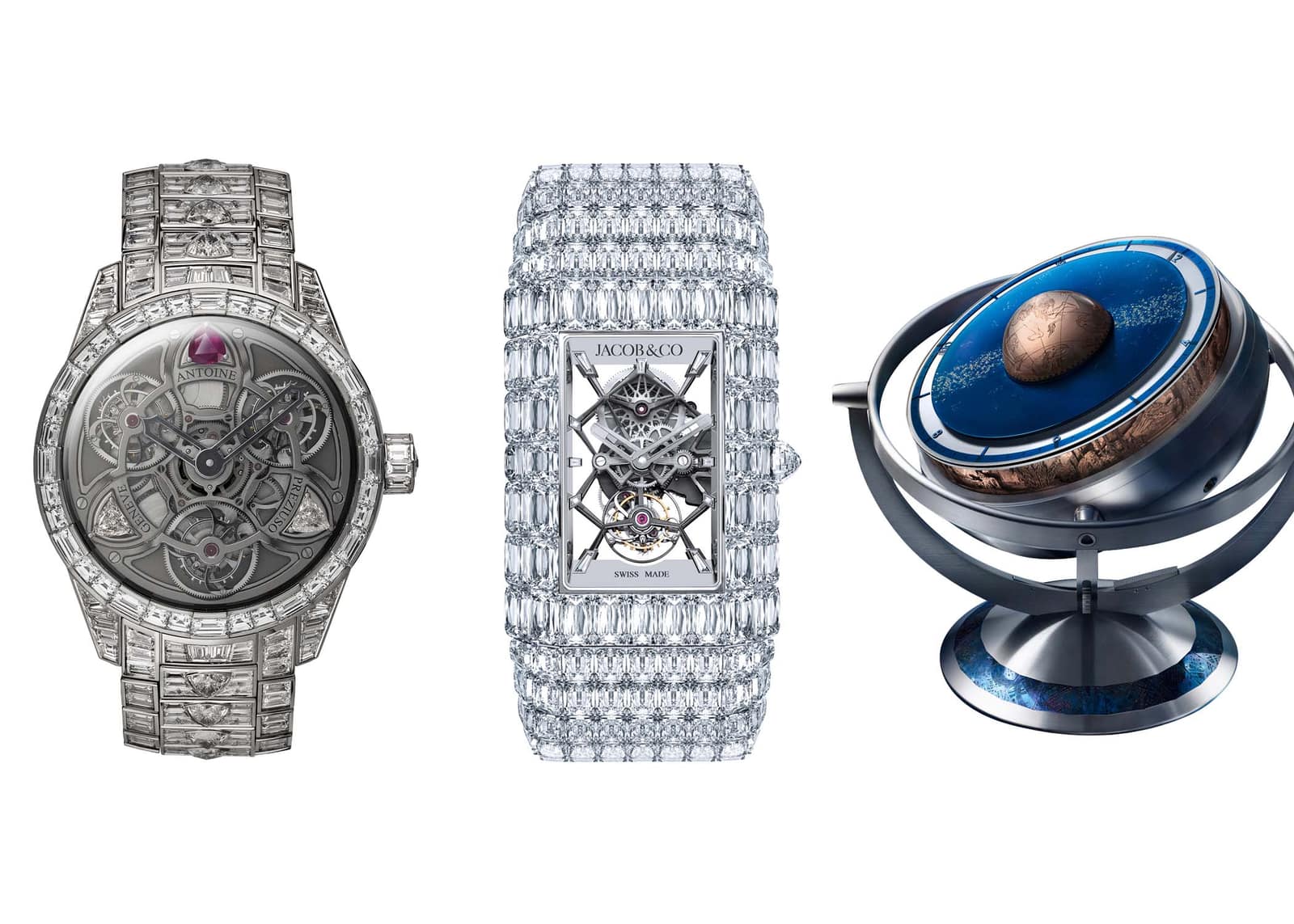
Top of the pile, at a nicely round ten million Swiss francs, is Antoine Preziuso's Trillion Radiant, entered in 2025. Preziuso is a Geneva independent best known for his Tourbillon of Tourbillons — three tourbillons turning in resonance — and the Trillion Radiant is a one-off, built to mark that mechanism's tenth birthday by smothering it in diamonds. By any measure it is a serious piece of watchmaking wrapped in a serious piece of jewellery.
And its GPHG Index score? There isn't one. The model only rates watches that reach the shortlist, and the Trillion Radiant did not — ten million francs, and it was left out of the final six in its own category. The jury, it seems, was unmoved.
Second, at seven million francs, is the Jacob & Co Billionaire Ashoka from 2021, a one-of-one from the New York house's Billionaire line — the range whose original ran to some 260 carats and a price tag north of eighteen million dollars. The Ashoka is a diamond-encrusted, one-minute tourbillon, and it is precisely as subtle as that sounds. It, too, went unshortlisted, and so it, too, has no score. A pattern is forming: the two most expensive watches this competition has ever seen never got as far as being judged.
The one that made the cut
Third — and, tellingly, the cheapest of the three, at a mere 4.4 million francs — is the only one that actually reached the shortlist. The Louis Vuitton × De Bethune LVDB-03 "Sympathique Louis Varius", entered this year, is a collaboration between Louis Vuitton's Fabrique du Temps and Denis Flageollet, De Bethune's co-founder and one of the more inventive movement-makers alive. It reinterprets Breguet's old "sympathique" idea — a clock that cradles a watch and sets it — with thirty specialists across fifteen disciplines thrown at the problem. It is, in other words, an object with an idea in it, and not merely a surface.
The model noticed. It gives the LVDB-03 a GPHG Index score of 24, making it the model's second pick among the six shortlisted clocks — behind L'Épée's rather more affordable Gekko. (Before the shortlist was published, the preselection model had already flagged it, rating its chances of being nominated at 60.) Not the favourite, then, but at least in the room, which is more than its pricier rivals managed.
The price of everything
There is a lesson in here, and it is an old one. The model barely looks at price; it reads a brand's history, a watch's complications, the company it keeps in its category. A diamond bill simply does not register — and, on this evidence, it does not register with the Academy either. Two of the three costliest watches ever entered were quietly passed over before a single juror had to weigh them against the field, and both of those arrived in the last two years, which tells you rather more about the top of the market than it does about the state of watchmaking.
The cynic, Wilde had it, knows the price of everything and the value of nothing. The market can always find someone to pay ten million francs for diamonds on a tourbillon, just as it found someone to pay six for a banana. Getting past the jury, happily, is still a different transaction entirely — and now there is a model that couldn't care less what any of it cost.