TAG Heuer and the Carbon Balance Spring: Third Time Lucky?
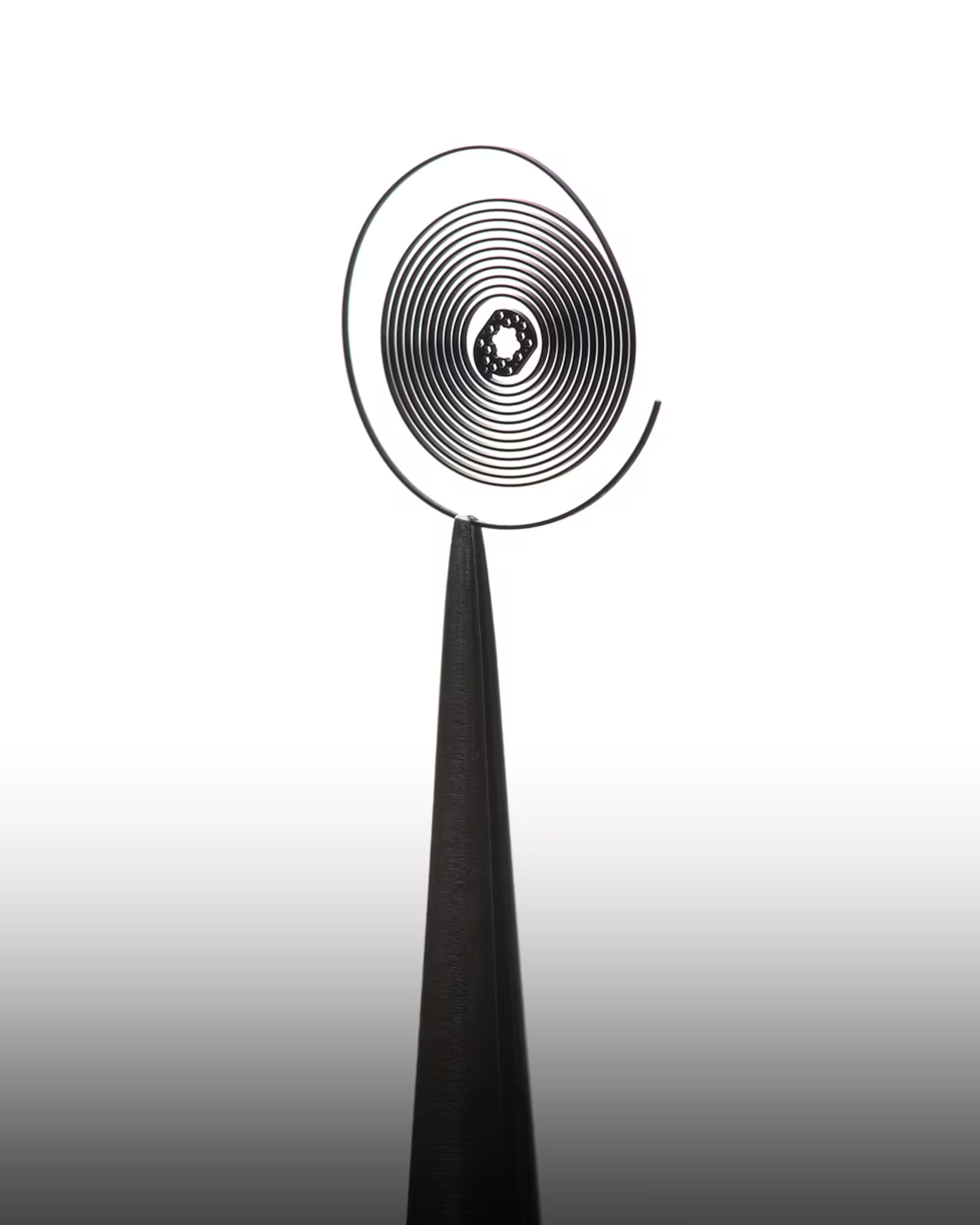
There are no fewer than six years between the headlines TAG Heuer invents the carbon balance spring and TAG Heuer Achieves Carbon Hairspring Industrialisation.
Six years is a mere blip on the timeline of the mechanical clock or watch escapement, but it is a great illustration of the gap between “invention” and “industrialisation”.
After first being introduced in the Carrera Calibre Heuer 02T Tourbillon Nanograph in January 2019, TAG Heuer’s carbon hairspring was presented in the Autavia “Isograph” models a few months later at Baselworld. Another few months later, in September, the Isograph was recalled and the same Autavia watches were refitted with a standard steel-sprung Calibre 5 movement. TAG Heuer’s explanation was that there was still some fine-tuning needed in the production process for the springs.
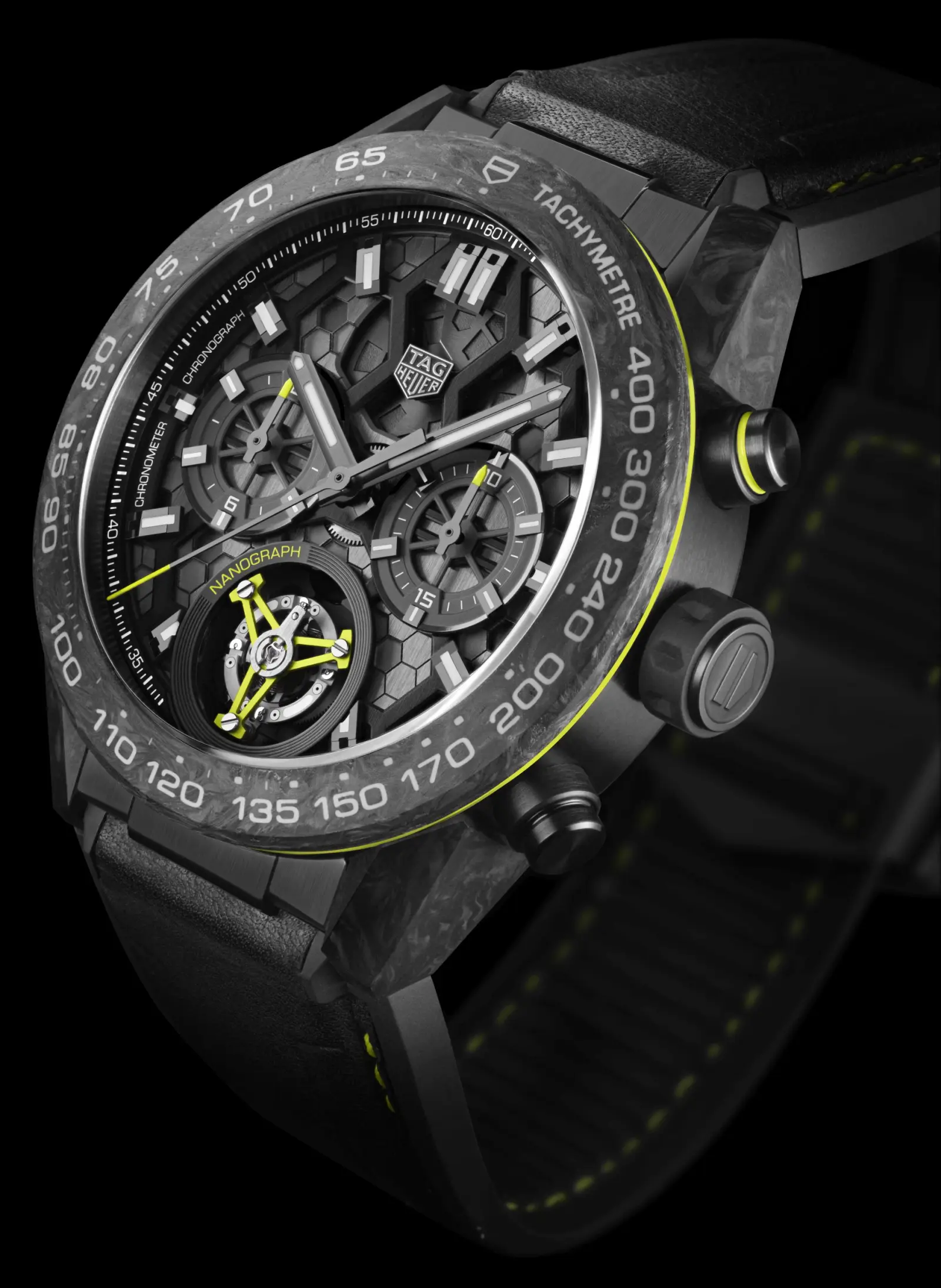
The TAG Heuer Carrera Calibre Heuer 02T Tourbillon Nanograph
The carbon nanotubes were not quite ready to do battle with their more established, but heavier, competitor: silicon.
So what was the problem? First of all, the manufacturing process for the carbon itself is complicated. Similar to silicon, the carbon nanotubes have to be grown in what the original patent referred to as a “nanotube forest”. Initially, TAG Heuer claimed to have the capacity to produce 125,000 springs per year, but by 2025 the company admitted that it would be happy with 15 quality-assurance approved springs per day.
Beyond the production constraints, however, lay a more serious problem. The nanotubes absorbed both moisture and lubricant over time, which compromised the balance wheel’s frequency and, consequently, the watch’s going rate. Not good for an industrial scale mechanical movement with chronometer aspirations.
This issue was solved by additional surface treatments listed in subsequent patents WO2025114588A1 and WO2025114587A1, including a diazonium-salt reaction to bond fluorinated carbon chains (C5–C10) onto the carbon surface and a further carbon coat of 50–500 nm, deposited at 500–1,200 °C, both reducing the nanocomposite’s porosity without any measurable change in its mechanical properties.
In the years during which the industrialisation was being refined, the technology continued to appear in watches across the LVMH brands. After the project was relaunched internally, the first batch of Zenith’s Defy El Primero 21 watches featured the carbon balance spring (before Zenith went back to standard Nivarox springs), as did a TAG Heuer Monaco for Only Watch 2021 and the 2022 Carrera Plasma Tourbillon Nanograph, which had a carbon tourbillon cage in addition to the carbon spring (and cost a modest CHF 350,000). You can trace TAG Heuer’s full GPHG record on our index.
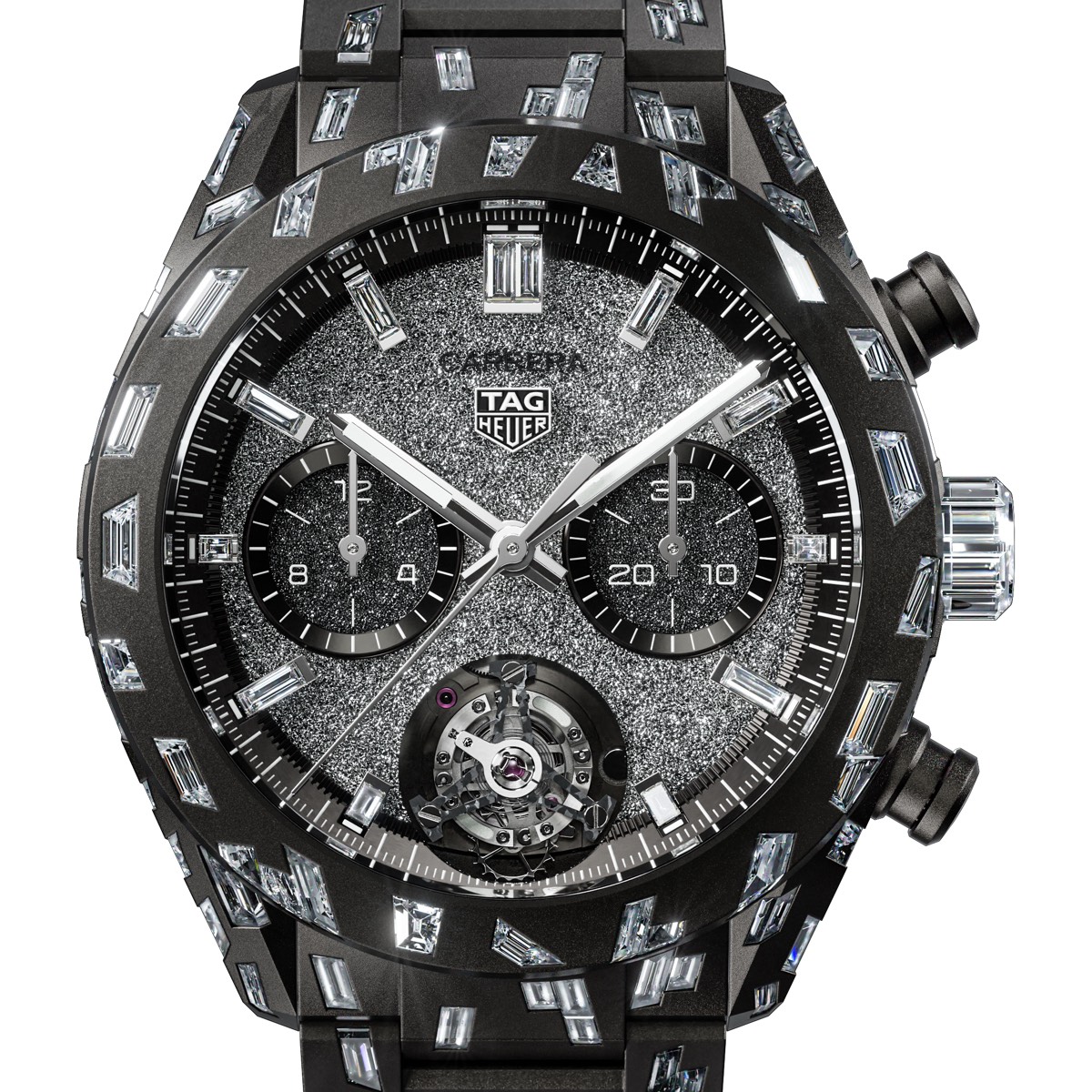
The TAG Heuer Carrera Plasma Tourbillon Nanograph
The true comeback came in 2025, when TAG Heuer presented the TH Carbonspring in September in two new watches, the Monaco Flyback Chronograph TH-Carbonspring (a limited run of 50, priced at CHF 17,000) and the Carrera Chronograph Tourbillon Extreme Sport TH-Carbonspring (also a limited edition of 50, priced at CHF 40,000).
Since then, TAG Heuer’s PR machine has been running at full power on pushing this innovation, with Carole Forestier-Kasapi (TAG Heuer’s movements director), reframing the narrative to stress the 10 years of development and the fact that the spring will ultimately be used in all of the brand’s high-end models. At Watches and Wonders in April 2026, the Isograph became the Evergraph (Calibre TH80-00) - a COSC-certified chronograph developed in collaboration with Vaucher Manufacture Fleurier that is the first non-limited watch fitted with a carbon balance spring since the Isograph and costs CHF 23,000.