The GPHG's dead brands
Should I stay or should I go: the GPHG's dead brands
Roughly a third of everyone who has ever entered the Grand Prix d'Horlogerie de Genève hasn't been seen since. Some of them went bust. Most of them just stopped calling.
Wolverhampton Wanderers were one of twelve founder members of England's Football League in 1888. So, in a rather more modest way, were Accrington F.C. – not to be confused with Accrington Stanley, the Lancashire club that exists today, which is a completely different organisation that didn't even come into being until 1968. The original Accrington resigned from the League in 1896, went bust shortly afterwards, and simply ceased to exist. The Wolves, meanwhile, are still turning out every Saturday, 137 years and several near-death experiences later.
What on earth does a defunct Victorian football club have to do with the Grand Prix d'Horlogerie de Genève? Quite a lot, as it turns out, once you start pulling apart the GPHG database. Some of the names on that founder-member list of watch entrants have gone the way of the original Accrington – the company itself no longer exists in any meaningful sense. Most of them, though, are doing what Wolves did during their various spells outside the top flight: still very much alive, still selling watches, just not currently fielding a team in this particular competition.
Of the 725 brands that have ever submitted a watch to the GPHG since 2001, 259 of them – a shade over a third – haven't entered since 2020 or earlier. That is a genuinely enormous chunk of the competition's entire history sitting quietly in the "did not renew" pile, and it seemed worth working out who they actually are, and why they left.
Founder members who quietly walked
Most of the interesting departures are not obscure micro-brands that went under (though there are plenty of those too, and nobody will miss Longio Watch or Rebellion's 21 entries and precisely zero shortlists). The interesting departures are the names any watch-literate reader would recognise immediately, all of whom are, as far as anyone can tell, in perfectly rude commercial health:
| Brand | Entries | Shortlists | Prizes | Aiguille d'Or | Last entered |
|---|---|---|---|---|---|
| Patek Philippe | 33 | 13 | 6 | 2 | 2007 |
| Rolex | 2 | 0 | 0 | 0 | 2007 |
| Cartier | 31 | 12 | 5 | 0 | 2008 |
| Jaeger-LeCoultre | 30 | 11 | 5 | 0 | 2010 |
| F.P. Journe | 15 | 8 | 7 | 3 | 2011 |
| Richard Mille | 13 | 10 | 2 | 1 | 2012 |
| A. Lange & Söhne | 33 | 20 | 6 | 1 | 2017 |
| Carl F. Bucherer | 51 | 2 | 0 | 0 | 2018 |
Rolex barely turned up at all, which fits everything else we know about a brand that has never seen much point in trade juries. Patek Philippe collected two Aiguille d'Or trophies in 2002 and 2003 and hasn't submitted a watch since 2007 – nearly two decades of silence from the one manufacture whose name alone would improve any prize list. Cartier and Jaeger-LeCoultre both left on perfectly respectable form, with double-digit shortlists to their name. And F.P. Journe's 15 entries produced seven prizes – a win rate of 46.7%, comfortably the best strike rate of any brand with a meaningful sample size in this entire dataset – before Monsieur Journe apparently decided he'd made his point and stopped bothering. Richard Mille did something similar: won the Aiguille d'Or outright in 2007 with the RM 012, entered a handful more times, and hasn't been back since 2012.
None of that reads as failure. It reads as brands with nothing left to prove to a jury, or – in Rolex's case – brands that never particularly wanted the jury's approval in the first place.
The Accrington cases
Then there's the other pile, where the departure genuinely does line up with hard times. De Grisogono entered steadily through the 2010s, picked up the odd shortlist, then tailed off to a single, shortlist-free entry in 2019 before disappearing – a pattern that matches the receivership and restructuring the Geneva jeweller-watchmaker went through publicly around that time. DeWitt shows the same shape: routine entries through 2014 and 2015, a shortlist in 2015, then nothing but blanks in 2018 and 2019 before it, too, went quiet, consistent with the financial difficulties that dogged the brand for much of the decade. I'd flag both of those causal links as informed reading of a public record rather than anything the GPHG database itself can prove – a database of watch entries can't tell you why a company stopped submitting them – but the shape of the data (declining participation, drying-up shortlists, then silence) is exactly what you'd expect to see if rejection fatigue, or something more serious, set in before the final entry.
Keep an eye on this lot
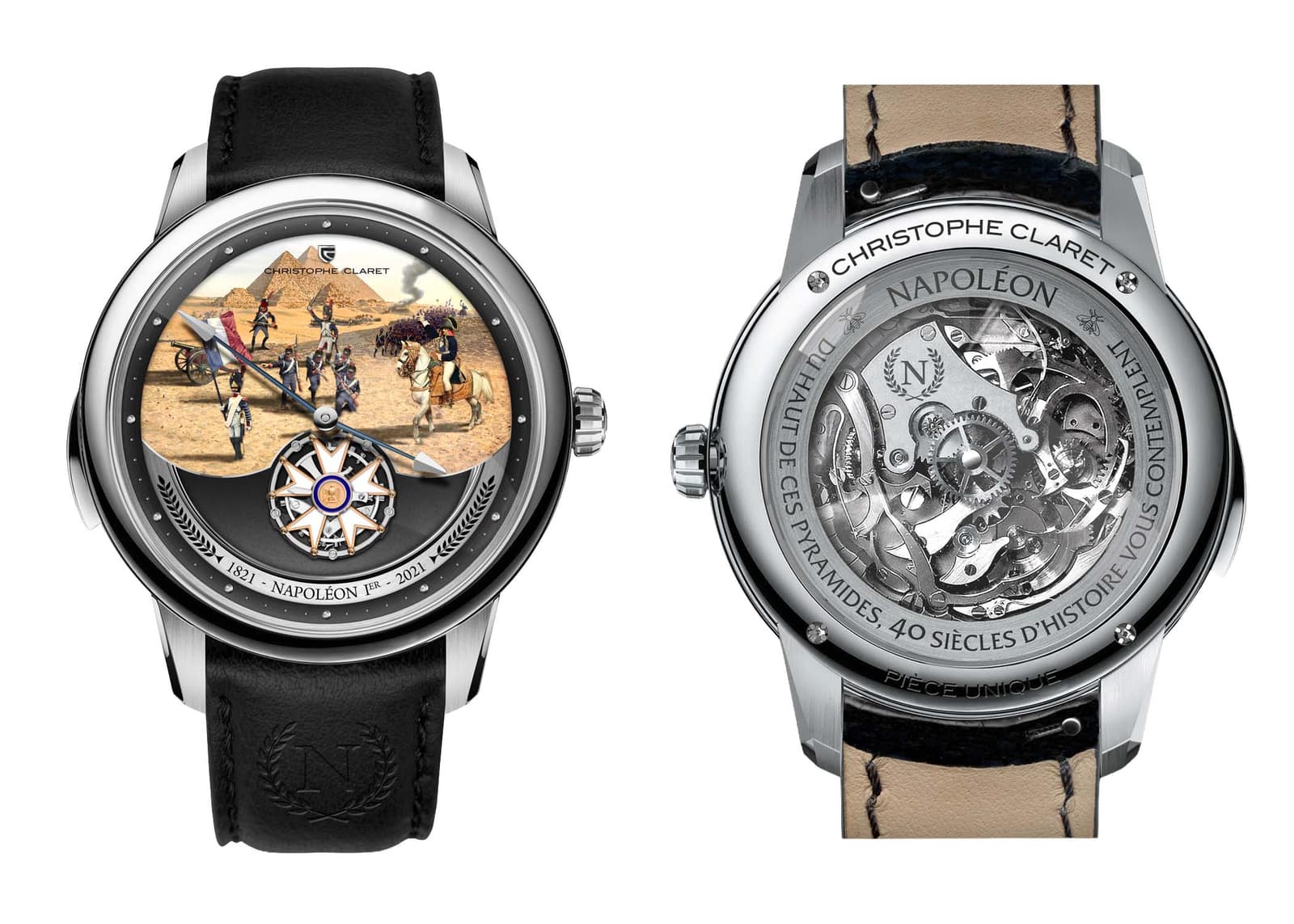
Which brings me to the founder members who haven't formally resigned from the league, but whose seats have been empty for a while. Vacheron Constantin's most recent GPHG entry was in 2021 – a shortlisted Overseas Perpetual Calendar the year before that – and there has been nothing since. Chanel, Bell & Ross, Roger Dubuis and Christophe Claret (who will be back next year after an investment company bought the name [article in French]) all share that same last-seen year. Four or five editions without an entry used to be my working definition of "gone" until I started writing this piece and realised quite how many genuinely major names sit in exactly that bracket. By the 2027 edition, if the silence continues, this year's watchlist becomes next year's dead-brand list – and Vacheron Constantin, an Aiguille d'Or winner as recently as 2005, would be a considerably bigger loss to the roll call than Accrington ever was to the Football League.
Wolves are still there every August, name unchanged, ground unchanged, hope eternal. Most of watchmaking's grandest names have simply decided they don't need to turn up for pre-season training any more – which, unlike a football club living or dying by its league position, they can very comfortably afford to do.